
Mick Parnell’s Luck
An Irish Folk Tale
‘Come listen to a tale of times of old, come listen to me.’

Once a farmer called Mick Parnell rented a few acres of fairly barren land in County Clare, in the west of Ireland. Mick had a wife and family to feed and with only a horse, a few cows, four hens and a couple of fields of potatoes, times were hard and he barely made enough money to buy food and pay the rent. Although times were indeed hard, they managed for a good while; then came a bad year when the rain brought a blight that destroyed the potato crop. One morning, the stalks stood tall and green and by evening they lay black shrivelled, like a fire had scorched the earth and left a charred mess in its wake.
For a while Mick and his family survived on milk and eggs, although these too dwindled as he had to sell his cows and hens to pay the rent, until only his horse remained.
“What’ll we do Molly?” he said in desperation to his wife.
“There’s only one thing we can do, take the horse to the fair in Ennis and sell him. If you don’t, we’ll surely starve,” she wailed.
Faerie folk*
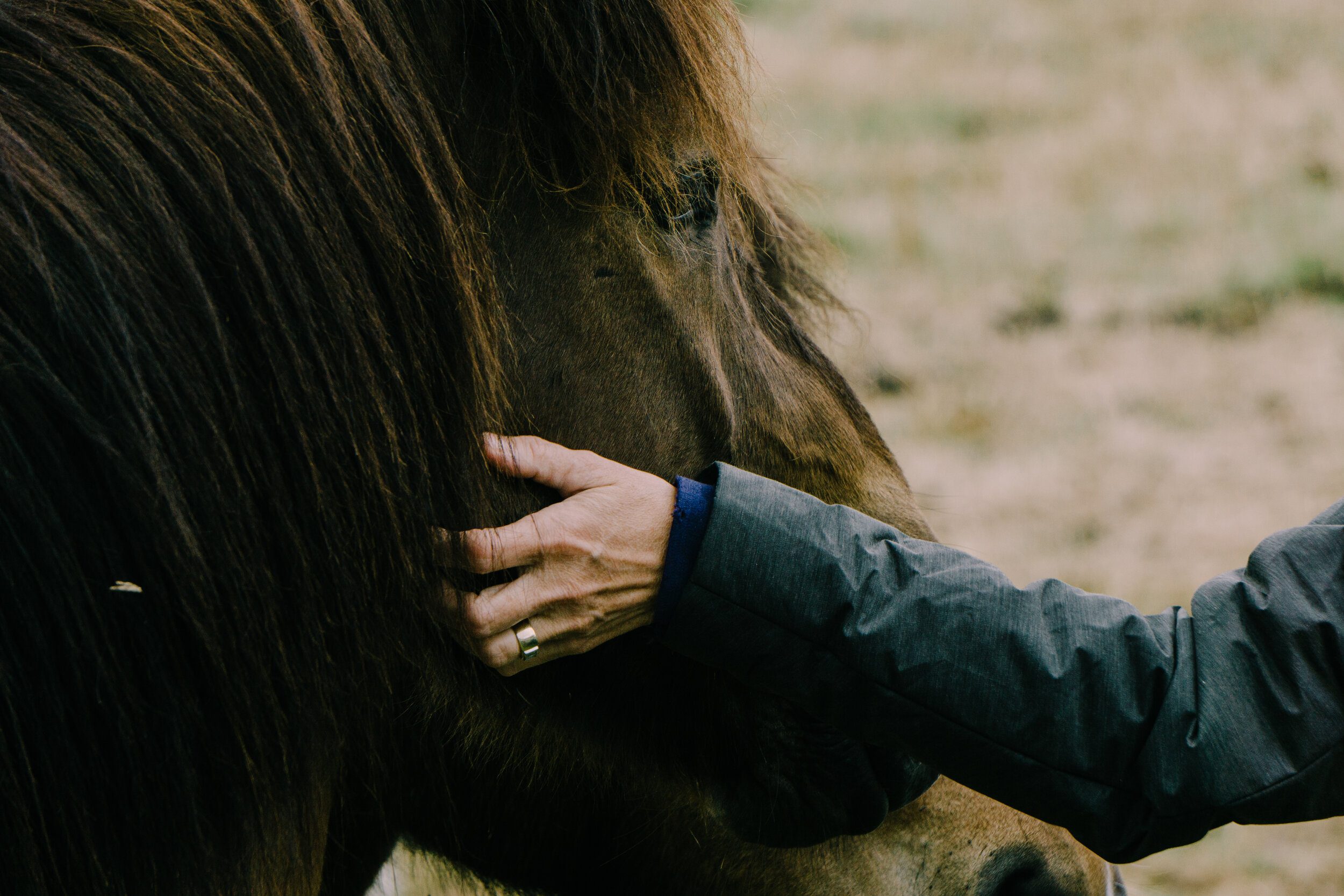
With a heavy heart, Mick set out with the horse the next day determined to sell him for the highest price to save his family. He rode his horse reluctantly towards the town and after about six miles, as he reached the top of a hill, he was suddenly joined by a strange looking wee man with an old, wrinkled, yellow face that reminded Mick of a dried-up cauliflower. “Good morrow,” says he to Mick. Dressed in red and green, Mick thought this was surely one of the little folk, but having never seen a fairy he could not be sure, but he remained wary of the stranger just the same.
“Where are you going on your very fine horse?”
“To the fair in Ennis,” says Mick.
“Are you going to sell him?” enquired the stranger.
“I’m afraid so for we can’t afford to keep him,” said Mick regretfully.
“Will you sell him to me?”
Mick was reluctant to have anything to do with this strange man but not wanting to appear rude he said, “What’ll you give me for him?” The wee man reached into his pocket and produced an empty bottle. “I’ll give you this bottle,” he says to Mick. Mick looked in astonishment at the bottle and laughed until his cheeks hurt.

“Laugh if you like,” said the little man, “but I’m telling you this bottle is better than any money you’ll get for that horse.”
“Do you think I’m such a fool as to give you this fine horse for an empty bottle,” scoffed Mick, “how will it help me to pay the rent and put food on the table for my family?”
“You’ll not be sorry for I tell you this bottle is better than money and I’m in dire need of a horse; take it and it will bring you good luck.”
Mick thought about his predicament. He might get a bad price for his horse or be robbed on the way home and he certainly did not want to throw away any good luck. Reluctantly, he agreed to sell his horse for an empty bottle. “I hope this bottle is as good as you say,” stammered poor Mick.
“Take it and be rich,” called the little man as he struggled to climb up on the horse’s back. “When you get home, do what I instruct you exactly. Sweep the room clean, lay a clean white cloth on the table and place the bottle in the middle of it, saying the words: bottle, do your duty.”
Mick retraced the road back to his cottage. The nearer he got the more anxious he became. What would Molly say? What if he had been tricked? The more he thought about it, the more foolish he thought his actions. Balancing his anxieties with his expectations, his fears with his excitement, he reached home, surprising Molly with his early return.

Did you sell the horse Mick?
His wife ran to greet him “Did you sell the horse? How much money did you get? Did you buy any food? Did you pay the rent?”
“Ach, stop a while Molly and I’ll tell you all about it.”
On hearing his story, poor Molly sat down crying; she couldn’t believe how foolish her husband had been – selling a fine horse for an empty bottle. What was to become of them? She grabbed the bottle to hurl it at Mick, but he caught it just in time. While his wife sat weeping by the turf fire, Mick swept the floor, laid a clean white cloth on the table and placed the bottle in the middle of it. With a trembling voice, he whispered “Bottle do your duty.”

The feast
At that moment, two tiny fellows rose like light out of the neck of the bottle, and in an instant covered the table in gold and silver dishes full of the most delicious food they had ever seen. The family stared in amazement and wonder at the magic of it all. They sat down at the table and ate a hearty meal and went to bed with their bellies full and satisfied. From that day on, Mick and his family never wanted for food again and had plenty to share with their neighbors. As for the empty bottle, well they kept that a very close secret. In fact, as far as I know, you and I are the only two people who know about it.
*Faeries or Fairies?
Hill folk, the gentry, wee folk, good folk, blessed folk, or fair folk are all terms used for the little people, and fair folk was shortened to Fairies. In most cultures Fairies are all good but Irish legends tell of both good and bad. Some say that Faeries are bad whilst Fairies are good but we always used the term Faeries as the overall term for all. Other names worth noting in the Irish fairy lore are Banshee, Leprechaun, and Puca.



The Angel of the Battlefield