
Irish Culture and Heritage
Irish Music
Music is the beating heart of Celtic communities.
It drifts out of the pubs, the kitchen, the schools, the dance halls; in Ireland it seems to seep out of the very stones and hang in the air we breathe. It tells stories, brings tears, laughter, joy and sorrow; it pulses in the veins and catches the soul of the land.
The Irish Seisiún
The experience
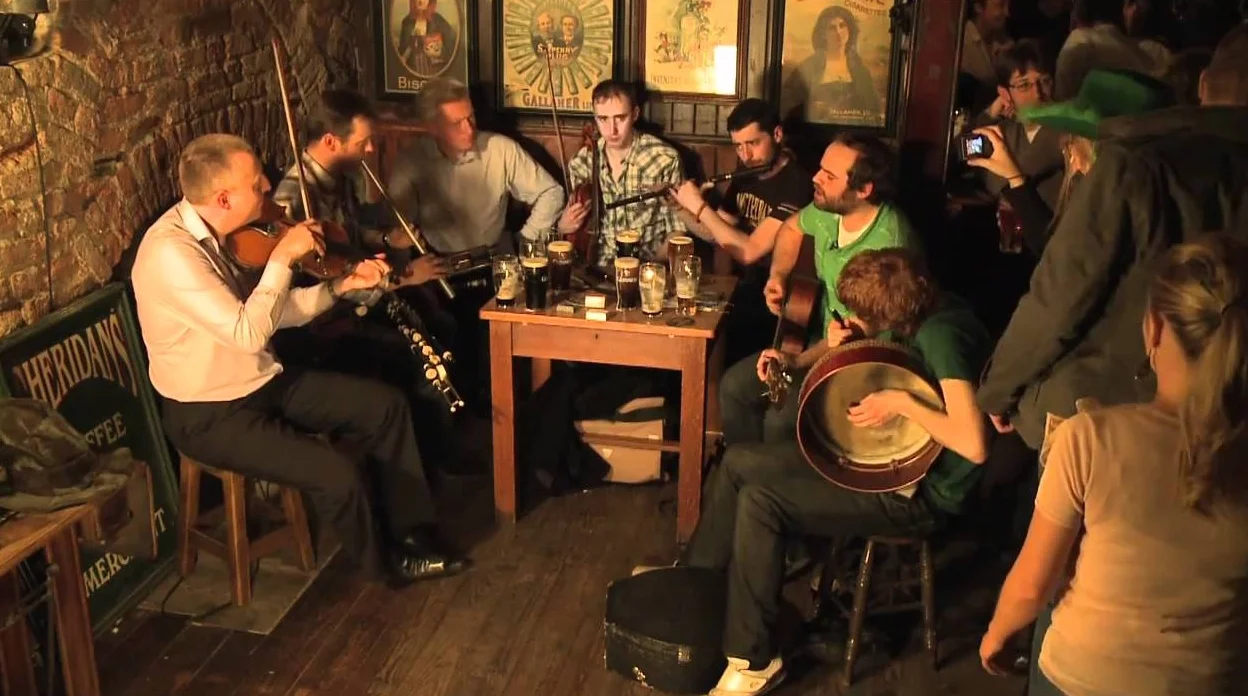
At first you may think it random; a great seisiún can see musicians join, leave, listen and play without direction or written notes. In fact, it is anything but.
Watch closely for the unwritten etiquette. Leadership may be informal and often moves around an established group – but the leader is easy to spot.
The seisiún relies on a unique blend of art and science. It’s similar to a blues or jazz jam, but is far more disciplined. It has an orchestral-like structure, but without the formality.
And the skill level is extraordinary.
If you have never been to a seisiún, you’ve never reached into the soul of Ireland. If you have, it will have reached into yours.
There’s nothing quite like a traditional Irish seisiún (or “session”). It generally goes something like this.
Walk in; take a seat at the bar you’ll not be a stranger for long. As the musicians gather, well used instruments familiar and strange emerge from battered cases and are carefully tuned.
There’s a bit of craic, perhaps a sip or two of Guinness. Someone strikes up the first tune. Within the first bar or two, others join in. The first tune is followed by another two or three tunes; together they form a set.
Most seisiún music has its roots in Irish dancing. Try the impossible: can you listen without tapping your foot?
The Technicalities
Putting together a set is an art that defies description. The music seems to ebb and flow from one tune to another seamlessly – but sets are often thrown together ad hoc, depending on who’s playing and what instruments are available.
The tunes of a set are usually all of the same sort, all jigs or all reels– although more accomplished players sometimes throw in a complementary tune of a different sort. A slip jig amongst the jigs, like a cat amongst the pigeons.
There are only twelve notes in the musical scale, but the intricate weaving, harmonics and fast changes require structure, trust and mutual respect.
Geometry holds it all together. When you hear those smooth changes as everyone switches at the same time, like a flock of starlings turning in unison, it’s because each player has a feel for the shape of the set and knows exactly where the pattern goes next.
Some popular seisiún tunes
Reels
Drowsy Maggie, Cooley's, The Banshee, The Maid Behind The Bar, The Silver Spear
Jigs
Morrison's jig, The Kesh, Out of the Ocean, Banish Misfortune
Slip Jigs
The Butterfly, The Kid on the Mountain, A Fig for a Kiss, The Rocky Road to Dublin
Some popular seisiún sets
The Coleman reels: The Tarbolton, The Longford Collector, The Sailor's Bonnet.[RF1]
Discover the instruments
Discover the Instruments
Alongside guitars, accordians, banjos and the ubiquitous fiddles, you may find a few less familiar instruments, all adding to the richness of the sound.
Bodhráns (pronounced “bow-rawn”)
The traditional Irish frame drum played with a “bone” (double ended stick) or the hand. Bodhráns have cured goatskin stretched over one side of a round wooden frame. The other side is open for one hand to be placed on the drum head to shape the sound.
Irish Bouzouki
It’s a long way from Athens to Dublin but the Bouzouki made the trip with a few modifications along the road. The basic Greek body design is unchanged but the stringing is completely different and though it seems it was always part of irish music it was only in the 1970’s that it began to appear.
Uilleann Pipes
Ah! the Uilleann pipes. It would take a book to explain the complexities of this amazing instrument and the extraordinary skill needed to play it. Suffice to say, that bag-pipes exist across Europe, but none compare to the unmistakable sound of this most traditional of Irish instruments. If you have the time and the interest, for a full description - click above:
Clairseach or Celtic harp
The symbol of Ireland but a hard task master and less common than it once was. It has metal strings and a large soundbox so the lasting resonance requires players to dampen strings which have just been played while at the same time plucking a new string, all at lightning speed. Unlike piano, the left hand plays the treble and the right the bass.
Tin Whistle
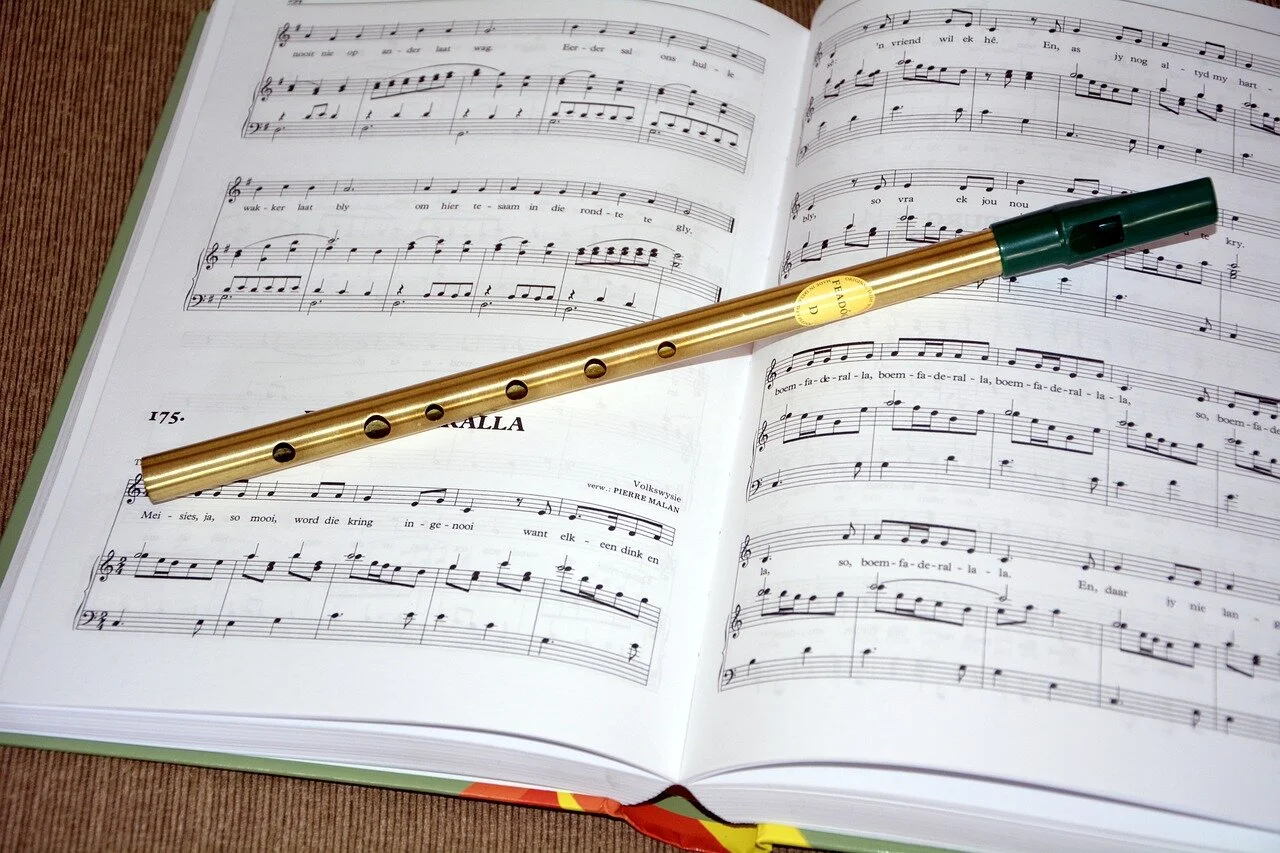
The simplest of all instruments, easy to play but oh so difficult to play well. Don’t be fooled by the name, in the right hands these are amazing instruments.
Flute
The Irish flute differs from concert flutes in a number of important ways. It has holes rather than keys and is made of wood, not metal, giving a warmer, more mellow sound. The flute is most associated with the stormy west coast of Ireland (think the storm scene in Ryan’s Daughter) but is now played throughout the land.