Joycelyn Bell Burnell
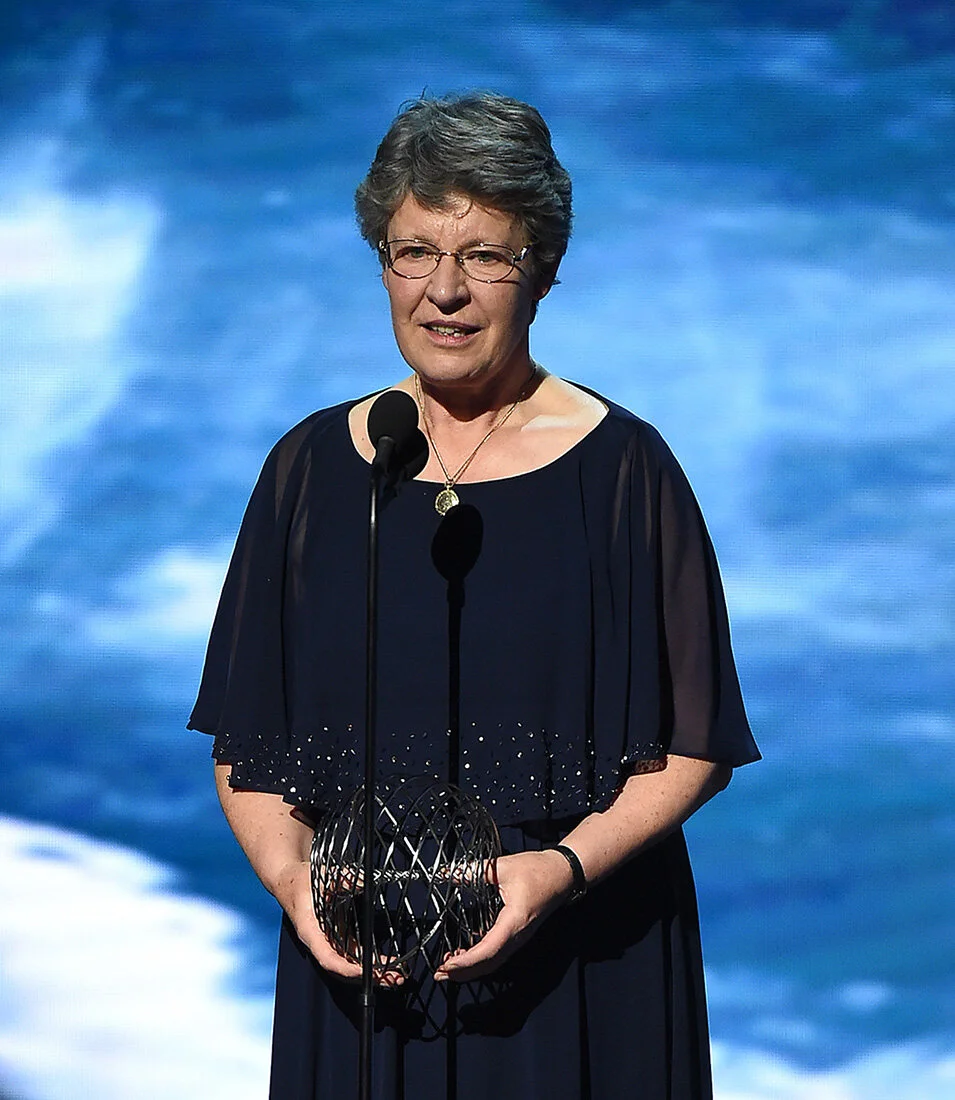
“If we assume we've arrived, we stop searching, we stop developing.“
Joycelyn Bell (Burnell) was born in Northern Ireland in 1943. From an early age she was fascinated by science, especially physics. Her father nurtured this interest and was instrumental in making sure that girls at Joycelyn’s school had the opportunity to study Science rather than cookery, a bold move in the 1950s!
“The girls got sent to the domestic science room and the boys to the science lab. I protested…unsuccessfully.” says Jocelyn.
After obtaining a degree in Physics in 1965 at Glasgow University, Joycelyn went on to further study as a research assistant in Astronomy at Cambridge University. Here, she helped to build a powerful radio telescope and her job was to analyze the enormous amounts of data it produced looking for patterns and anomalies.
Little Green Men
Over time, Joycelyn discovered minute pulsing signals which she recognized as natural, rather than signals from aliens - ‘little green men’ (no, not Leprechauns either!). The discovery led to the Nobel Prize for Physics in 1974, but Joycelyn was not the recipient. The prize went to her supervisors, Antony Hewish and Martin Ryle. Joycelyn accepted this with good grace commenting that it would be most unusual for a student and a woman to receive such an award.
She later commented on her discovery: “I switched on the high speed recorder and it came… blip…. blip…. blip…. blip…. blip. Clearly the same family, the same sort of stuff and that was great. It finally scotched the little green men hypothesis ‘cos it's highly unlikely that there's two lots of little green men, at opposite sides of the universe, both deciding to signal to a rather inconspicuous planet earth, at the same time, using a daft technique and a rather common place frequency. It has to be some new kind of star, not seen before.”
Joycelyn went on to work in the field of physics and to lecture in universities in the United Kingdom and in America. She was president of the Royal Astronomical Society from 2002 to 2004, and is currently a Legacy Fellow of the American Astronomical Society.
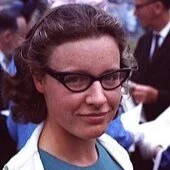
Jocelyn Bell (Burnell) 1967
Recognition at Last!
In 2018, Joycelyn was awarded the prestigious Special Breakthrough Prize in Fundamental Physics, worth over three million dollars, for her discovery of radio pulsars. She donated all the money to fund women, ethnic minority and refugee students to become researchers in physics. Joycelyn, now in her 70s, continually campaigns to improve the status and number of women in professional and academic posts in the fields of physics and astronomy. For her significant contribution and achievements in these areas, she was made a Dame in 2007.
“You can actually do extremely well out of not getting a Nobel prize.”
Joycelyn Bell Burnell